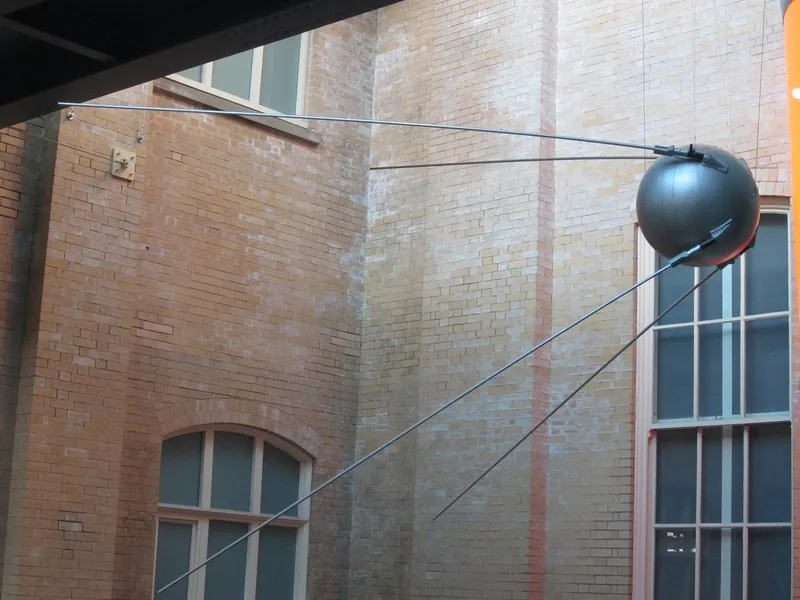
Sputnik-1 (replica)
The first artificial satellite of the Earth
On display
The PS-1 spacecraft was extremely simple: a sealed aluminium-alloy sphere filled with nitrogen, two radio transmitters on 20.005 and 40.002 MHz, silver-zinc batteries and a thermal-control fan. The task was not science but proof: the "beep-beep" signal had to be receivable by any radio amateur on the planet.
The satellite worked for 21 days and burned up in the atmosphere three months later after 1440 orbits. Changes in its orbit gave the first measurement of upper-atmosphere density, and the launch itself reshaped the engineering and political agenda of the decade.
On display is a full-size replica built to OKB-1 drawings, matching the original in mass and surface polish.
.JPG)